
Waċaŋġa - Sweetgrass
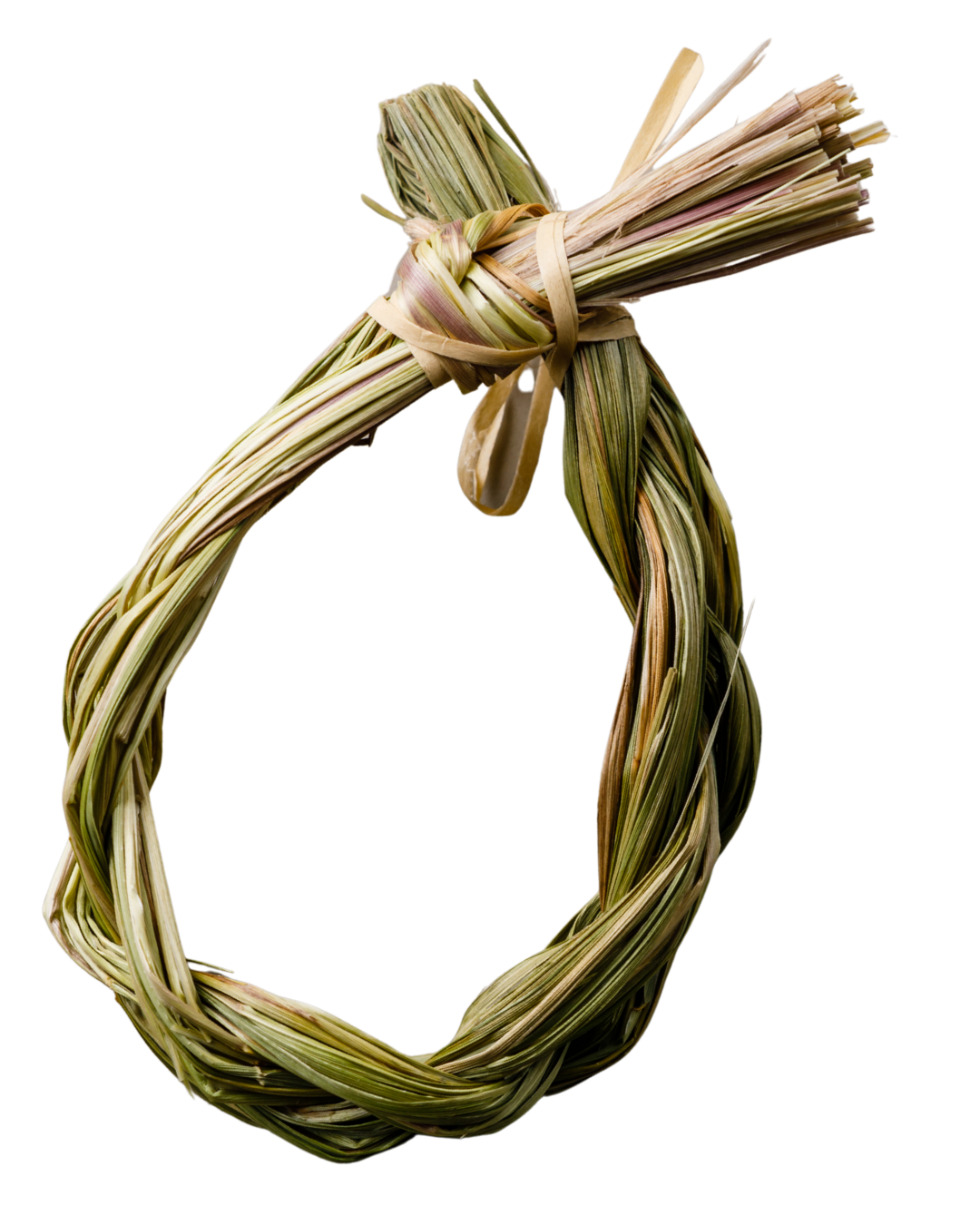
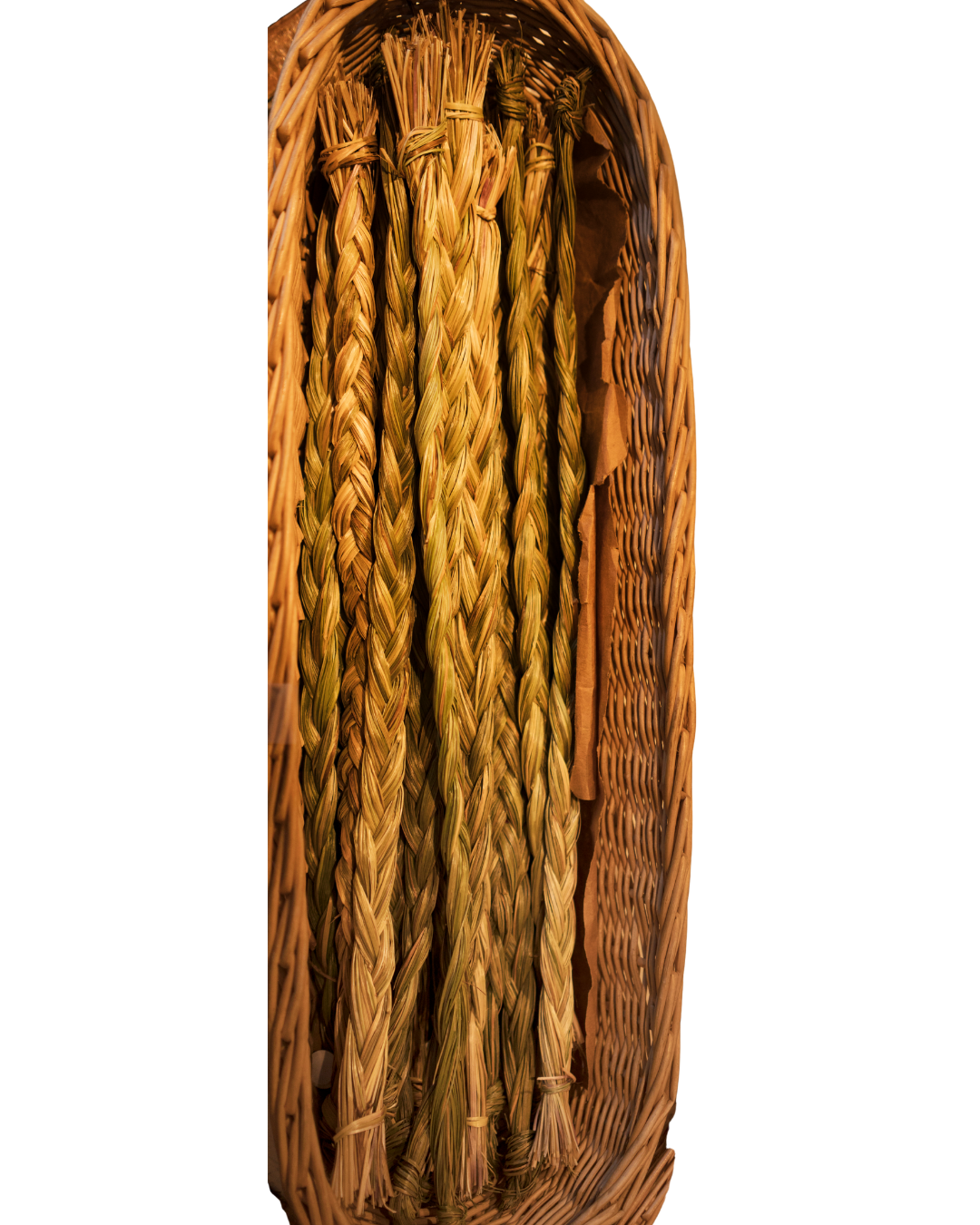
As the English name suggests, Waċaŋġa has a distinctly sweet smell. After drying, it is tied into its signature braids. Within the braids, the three strands are made up of seven pieces of Waċaŋġa each. One strand of seven represents the seven generations that came before us. One represents the seven virtues: Love, respect, honesty, courage, wisdom, truth, and humility. The third strand represents the next seven generations to come. All together, the braid represents the importance of balance.
-
Growing in meadows, Waċaŋġa can be harvested from late-June to mid-August. It is recognizable by the red or purple hue of the seeds at the tips of the blades and their base. We harvest by cutting 21 strands at a time.
-
After harvesting, replant the seeds where the plant grew and wait a few years before returning to the same spot. This will give the plant a chance to recover.
-
Waċaŋġa is uses for Azilya (smudging) to purify spaces and invite positive energy in. Often after smudging with Waċaŋġa we’ll smudge with Ḣaƞta (cedar) or P̄ejiḣot̄a (sage). Alongside P̄ejiḣot̄a, Waċaŋġa is used in many of our ceremonies.